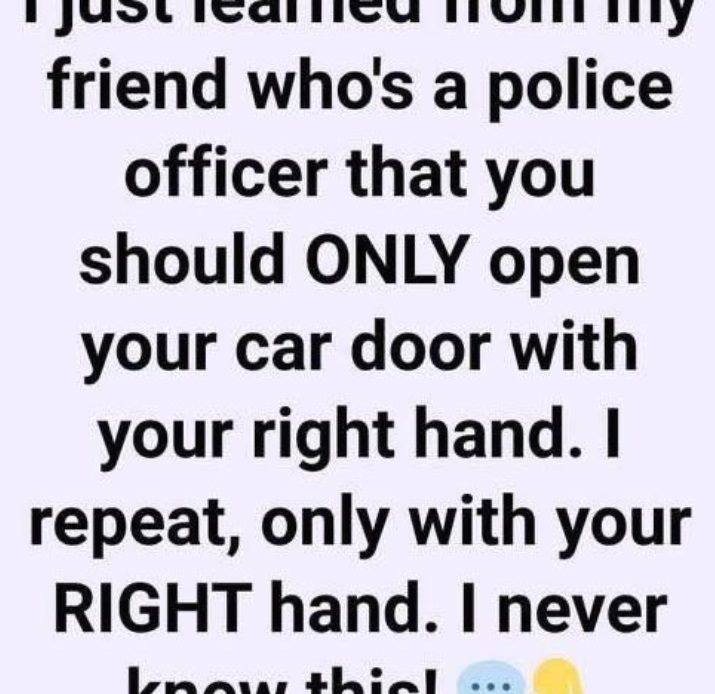
I Just Learned From My Friend That You Should ONLY Open Your Car Door With Your Right Hand
Why Road Safety Matters More Than Ever
In today’s fast-paced world, traffic feels more overwhelming than ever. Whether you’re behind the wheel, riding a bike, or walking across a busy street, the roads are crowded with people all moving at different speeds. While we all know the basics—follow the speed limit, wear a seatbelt, and avoid texting while driving—it’s often the small, overlooked habits that make the biggest difference in preventing accidents.
One of those habits is the Dutch Reach, a simple but powerful technique that can dramatically reduce a common type of collision. It’s quick to learn, easy to practice, and could protect both drivers and cyclists from life-changing accidents.
Think of it this way: just as buckling a seatbelt is second nature, the Dutch Reach can become a small step toward safer roads. It’s a reminder that safety isn’t just about following the rules—it’s about building mindful habits that protect ourselves and those around us.
The Hidden Risk: What Is “Dooring”?
Many drivers have never heard the term “dooring,” yet it happens every day in cities around the world. Dooring occurs when someone opens a parked car door directly into the path of a cyclist or scooter rider. The result can be a sudden crash, throwing the rider into traffic or onto hard pavement.
Imagine cycling down a bike lane when, without warning, a door swings open. The rider has only a split second to react. Even with helmets and protective gear, these accidents can cause serious injuries. The frustrating part? They are completely preventable.
A Personal Wake-Up Call
Sometimes, we don’t truly notice a danger until we experience it firsthand. A close call can change the way we think about safety. One driver described how a friend once opened a car door just as a cyclist approached. The rider swerved in time, but the situation could have ended very differently.
As they put it: “We got lucky—and luck is not a safety plan.” That moment became a turning point, showing how one small action could protect lives.
How the Dutch Reach Works
The Dutch Reach comes from the Netherlands, a country known for its cycling culture. The method is simple:
- If you’re the driver, use your right hand to open the car door.
- If you’re the passenger, use your left hand.
This motion forces your body to rotate, naturally making you look over your shoulder. In doing so, you check your side mirror and blind spot for approaching cyclists, scooters, or cars. What feels like a small adjustment actually creates a built-in safety check.
At first, the movement may feel unusual. But with practice, it becomes instinctive—just like fastening a seatbelt or checking mirrors before changing lanes.
Why You’ll Love This Habit
- Prevents accidents – reduces the risk of dooring collisions.
- Simple & free – no gadgets or apps required.
- Protects everyone – cyclists, scooters, and drivers alike.
- Family-friendly tip – easy to teach new drivers and children.
Building a Safer Road Culture Together
While the Dutch Reach is powerful, true road safety requires shared responsibility. Cities can support safer travel by building protected bike lanes and placing clear signs. Driving schools and education programs can teach the Dutch Reach to new drivers from day one.
But ultimately, the change begins with us. Whether you’re a driver, passenger, cyclist, or pedestrian, adopting thoughtful habits helps create safer roads for everyone.
Key Takeaways
- Road safety is about awareness and prevention, not luck.
- The Dutch Reach is a simple habit that can be learned in seconds.
- By turning your body and checking behind you, you make the roads safer.
- Every person—drivers, passengers, and cyclists—plays a role in accident prevention.
Final Thought
The next time you step out of a parked car, pause for a moment. Use your far hand to open the door, turn your body, and glance behind you. This one small habit can protect a cyclist, prevent a costly accident, and maybe even save a life.