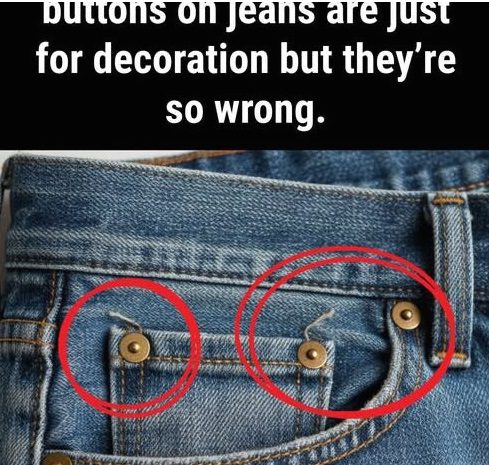
Why Do Jeans Have Those Small Metal Rivets?
Most of us pull on a pair of jeans without a second glance, barely registering the tiny metal pieces near the pockets. Small, round, and usually matching the rest of the hardware, they blend right in. To many people, they look like purely decorative accents meant to make denim appear rugged or “authentic.” But those little metal dots aren’t just style choices. They’re rivets — and without them, jeans wouldn’t have survived the heavy use that shaped their history.
The Rivet: A Small Detail With a Big Job
A rivet is a basic metal fastener, pressed through layers of fabric to strengthen areas that take the most stress — corners, seams, and pockets that get tugged and pulled every day. Today we see them as part of the classic denim look, but in the 1870s, they were invented out of pure practicality.
Back then, jeans weren’t about fashion. They were essential gear for miners, railroad workers, and cowboys. Denim was sturdy, but it had limits. Pockets ripped, seams failed, and flies tore open. One tailor, Jacob Davis, kept hearing the same complaint: the pants just didn’t hold up.
So he tried an idea. He used copper rivets — the type usually found in industrial settings — to strengthen the weak spots. The upgrade worked. The reinforced pants lasted months or even years. Davis realized he had something valuable but couldn’t afford a patent on his own. He reached out to his fabric supplier, Levi Strauss, and together they patented the riveted jean in 1873. The design was all about durability, not looks.
From Practical Fix to Cultural Staple
It didn’t take long for word to spread. Workers appreciated how tough the new jeans were, and demand skyrocketed. What began as a workaround for tearing pockets soon became an emblem of strength. As denim evolved from workwear into everyday clothing, rivets stayed part of the package.
Rivets themselves are simple — usually copper or brass, metals chosen for their resistance to rust and their ability to handle pressure. They’re typically placed at the front-pocket corners, where stress builds up from movement and weight. Early jeans also included rivets near the fly and on the back pockets, though complaints from horseback riders — scratched saddles, damaged leather — eventually led companies to remove or relocate them.
A rivet works by spreading tension across a wider area, preventing the fabric from ripping at a single point. People who’ve owned jeans without rivets know how quickly pocket corners can fall apart.
Rivets Today
Most of us aren’t mining or building railroads anymore, but rivets still show up on jeans. They’ve shifted from a workwear essential to a symbol of classic denim craftsmanship. Many brands treat them as a mark of authenticity, stamping logos into them, choosing eye-catching metals, or arranging them in recognizable patterns.
Still, fashion has changed. Some modern jeans skip rivets entirely, opting for strong stitching or hidden reinforcements instead. This creates a sleeker look and solves real-world issues — like when a rivet digs into your hip during a long car ride or flight. Rivet-free jeans also appeal to people looking for lighter or more recyclable clothing.
But denim enthusiasts often insist on copper rivets. To them, rivets aren’t just a functional feature — they’re a connection to tradition. They reflect an era when clothing was measured by longevity rather than trends.
A Lasting Legacy in Every Pair
As jeans wear in, the fabric becomes softer and shapes to your body, but the stress points don’t go away. Without rivets, those areas break down quickly. With them, jeans stay together long enough to develop that perfectly worn-in feel. Even where rivets are placed tells part of denim’s story — at pocket edges for tension, at the fly for movement, and once upon a time at the back pockets before riders complained.
Their staying power explains why rivets have remained for over 150 years. Styles shift — skinny, baggy, raw, stretch — but rivets continue to serve as the unseen foundation of denim design.
When you put on jeans, you’re wearing more than just sturdy fabric. You’re wearing a piece of industrial innovation. Rivets are reminders of problem-solvers, hard work, and the need for clothing built to last. They’re not decoration. They’re visible engineering — a tiny detail with a history far bigger than their size.